
ChatGPT vs Perplexity vs Gemini: Platform GEO Strategies
ChatGPT, Perplexity, and Gemini retrieve content differently. Optimize for entity clarity, freshness, and technical SEO to align platform strengths on a shared foundation.
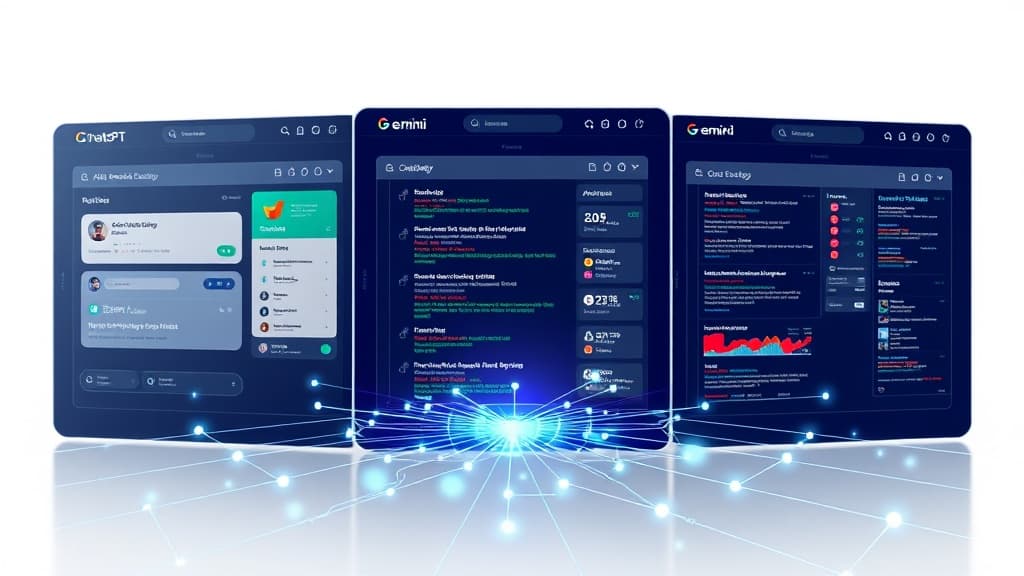
TL;DR: ChatGPT, Perplexity, and Gemini retrieve and rank content through distinct systems. Optimize for entity clarity and structured data for Gemini, fresh citable content for Perplexity, and broad third-party corroboration for ChatGPT. Then align each platform's strengths on one shared content foundation.
ChatGPT, Perplexity, and Gemini each source answers through different mechanisms, so a single generic approach falls short. You need a platform-specific GEO strategy for each.
How Do ChatGPT, Perplexity, and Gemini Actually Source Their Answers?
ChatGPT draws from a large pre-training dataset and, when a query calls for it, a live Bing-indexed browsing layer. That layer pulls from pages Bing has indexed, weighting sources by relevance, authority, and consensus across multiple domains. A broad presence on sites like Reddit, Quora, and Wikipedia raises your odds of being cited.
Perplexity runs on a proprietary real-time search index that continuously crawls the web. It prioritizes freshness and source transparency, showing exact source cards for every claim. Its retrieval step is independent of any single search engine, and the model that generates the answer may be Perplexity's own or a licensed one like GPT-4 or Claude.
Gemini is tied directly to Google's core search index and Knowledge Graph. It pulls from the same crawled corpus that powers Google Search and adds real-time grounding for current-events queries. As a result, technical SEO signals, crawlability, and structured data drive Gemini visibility.
What Does GEO Look Like for ChatGPT?
ChatGPT rewards clear entity definition. Pages with explicit headings, structured author bios, and organization schema let the model extract and cite content reliably. A concise line like "365Digital is a digital marketing agency specializing in SEO, AI visibility, and business automation" is easier to lift than a vague mission paragraph.
Formatting matters too. Lists, tables, and bolded key terms improve extraction accuracy for the browsing layer. Broad third-party corroboration (mentions on Reddit, Quora, review sites, and Wikipedia) acts as a trust multiplier, even though it isn't a traditional backlink signal.
ChatGPT Plus costs $20 per month, and the free tier also accesses the browsing layer when a query triggers live search.
What Does GEO Look Like for Perplexity?
Because Perplexity shows its sources, being the cited source is worth more than simply ranking. Your content should carry clear publication dates, author bylines, and data points formatted for direct extraction.
Freshness is a dominant signal. A page with a recent update timestamp outperforms an evergreen page with no date cue. A tight, fact-dense paragraph such as "Perplexity's retrieval layer is a proprietary real-time search index, not Google's" is ideal for citation.
Statistics, percentages, and named findings increase citation likelihood because they give the model concrete, attributable value.
What Does GEO Look Like for Gemini?
Gemini relies on Google's index, so technical SEO is paramount. Crawlability, indexation status, page speed, mobile-friendliness, and structured data all influence whether Gemini can surface a page. Apply technical SEO best practices so Googlebot can render your content.
Schema markup (Article, FAQ, HowTo, Product, Organization) helps the Knowledge Graph understand entities and their relationships. Verify implementation with Google Search Console and Google's Rich Results Test to confirm your structured data is indexed correctly.
NotebookLM, bundled with Google One Pro at $20 per month, shows how Gemini's architecture processes uploaded documents. Aligning content with Google's entity understanding benefits both Gemini citations and NotebookLM summaries.
Which Platform Matters Most for Your Specific Use Case?
Perplexity dominates research-oriented queries because its transparent citations build trust for fact-checking. Gemini excels at creative writing and tasks that lean on Google's Knowledge Graph. ChatGPT remains the strongest all-purpose assistant for daily work like drafting emails or brainstorming ideas.
| Platform | Core Strength | GEO Priority Factor | Pro Tier Price |
|---|---|---|---|
| ChatGPT | All-purpose assistant, broad integrations | Entity clarity and third-party corroboration across the open web | $20/month |
| Perplexity | Real-time research, source transparency | Freshness, citable data points, and direct-answer formatting | $20/month |
| Gemini | Creative output, Google ecosystem integration | Technical SEO and structured data tied to Google's index | $20/month |
A query like "Python code for data cleaning" often surfaces on Perplexity and ChatGPT, while Gemini may prioritize official documentation. So match your effort to intent: prioritize Perplexity for research-heavy queries, Gemini for creative or reasoning-heavy tasks, and ChatGPT as the baseline for broad everyday questions.
How Do You Build One GEO Strategy That Works Across All Three?
When we audit client sites for AI visibility, different pages surface for the same query on each platform. Our framework builds platform-specific strengths on a shared content foundation.
First, implement comprehensive structured data site-wide, using Organization, Author, and FAQ schema to clarify entities. This gives each model the extraction-ready signals it needs.
Second, run a digital PR campaign that earns mentions on authoritative domains, review sites, and industry publications. Those mentions supply the broad corroboration ChatGPT values and the fresh references Perplexity rewards, while Gemini benefits indirectly as they strengthen Google's indexing signals.
Third, keep entity and author clarity on every page. Add consistent author bios, organization schema, and factual claims written as self-contained answer paragraphs. A product page with FAQ schema, a clear byline, and a recent update timestamp satisfies all three platforms at once.
Finally, maintain a content layer built from statistics, definitions, and stand-alone answer paragraphs. That format works for ChatGPT's browsing extraction, Perplexity's citation engine, and Gemini's Knowledge Graph parsing.
Key Takeaways
- Perplexity uses its own real-time retrieval layer; it does not run on Gemini.
- Gemini's visibility depends on Google's index, so technical SEO is critical.
- Perplexity rewards being the cited source, freshness, and clear statistics.
- ChatGPT relies on broad third-party corroboration, not just your own site.
- Each platform needs a distinct approach, but one shared structured-content foundation serves them all.
Frequently Asked Questions
Is Perplexity better than ChatGPT or Gemini?
Perplexity excels at research and source-transparent answers. ChatGPT is more versatile for general tasks, and Gemini leverages Google's index for creative output. "Better" depends on your query intent.
Does Perplexity actually use Gemini?
No. Perplexity relies on its own real-time retrieval index and licenses models such as GPT-4 or Claude for generation. It does not depend on Gemini's infrastructure.
Which AI is better between ChatGPT and Gemini?
ChatGPT offers broader third-party integrations, while Gemini benefits from direct access to Google's search index and Knowledge Graph, giving it an edge on creative and reasoning-heavy tasks.
Which AI is best for research?
Perplexity is best for research because it prioritizes source transparency and displays exact citations for every claim.
Which AI is best for creative writing?
Gemini is considered the strongest for creative writing, with G2 noting its advantage on creative output and deep reasoning within Google's ecosystem.
Which AI is best for daily tasks?
ChatGPT is the most capable all-purpose assistant for everyday tasks, offering wide integrations and a familiar interface for drafting, brainstorming, and quick lookups.
Written by the 365Digital team: SEO strategists, automation specialists, and content marketers helping businesses grow their organic and AI search visibility since 2013.
Want a platform-by-platform GEO audit for your site? Talk to the 365Digital team.