
Entity Authority: How AI Understands Your Brand
Entity authority measures how confidently AI verifies your brand. Build it with consistent NAP, structured data, and citations for better visibility.
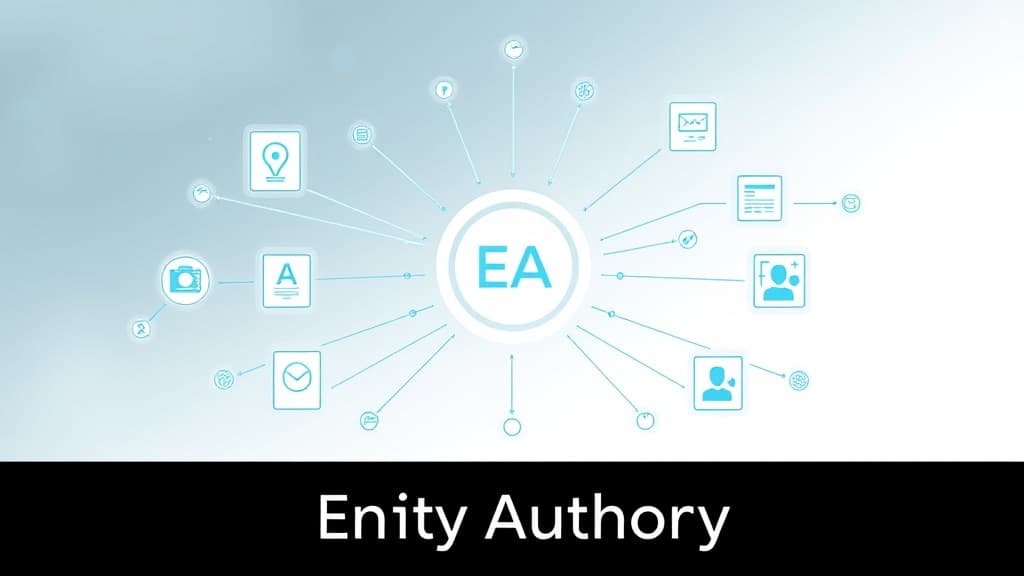
TL;DR: Entity authority measures how confidently AI and search engines can verify your brand as a distinct, real entity. You build it with consistent NAP, structured data, verified profiles, and third-party citations. Quick wins appear within weeks, while high-authority citations typically take two to six months.
What Is Entity Authority in SEO?
Entity authority answers a single question: can an AI system confidently verify who you are, what you do, and where you operate? It differs from domain authority, which focuses on backlink equity. Entity authority relies on three signals across the web: clarity, consistency, and trust reinforcement.
Clarity means machines can parse exactly what your entity is. Consistency means the same name, address, phone number, and category appear everywhere. Trust reinforcement comes from independent sources confirming those claims.
Entity authority is not the same as topical authority. The former measures verification of the brand itself, while the latter measures expertise in a specific subject area.
Entity Authority vs. Domain Authority: What's Actually Different?
Domain authority estimates a site's ranking potential based on its backlink profile. Entity authority gauges whether AI and search systems can identify, verify, and trust a brand independent of links. A high-domain-authority site can still be invisible in AI-generated answers if its entity signals are weak.
Google's Knowledge Graph uses entity authority as a verification layer, rewarding structured data, consistent NAP, and third-party citations over raw link volume.
| Domain Authority | Entity Authority |
|---|---|
| Measures link equity and backlink strength | Measures how confidently machines can identify and verify a brand |
| Influences traditional organic rankings | Influences AI answers, knowledge panels, and AI overviews |
| Built through link acquisition and internal linking | Built through structured data, consistent NAP, verified profiles, and third-party citations |
| Domain-level metric (can be page-level) | Entity-level metric, independent of any single domain |
How AI Systems Use Entities to Understand Your Brand
When an AI model receives a query, it looks for an entity that matches the intent, then checks whether that entity is verified, consistent, and trustworthy enough to cite. Structured data is the direct input for this verification loop.
Schema.org markup tells Google what entity a page represents, its attributes, and its connections to other entities. Google's indexation layer reads this markup immediately after recrawl.
The AI then cross-references the same NAP and category data against your Google Business Profile, verified LinkedIn profile, industry directories, and Wikidata entry. Consistent signals across these sources raise confidence and trigger citations in AI answers.
How to Build Entity Authority for Your Business, Step by Step
Follow this prioritized sequence. Early steps deliver fast wins, and later steps compound over months.
1. Fix NAP consistency and add schema markup
Make sure your name, address, and phone number are identical on your website, Google Business Profile, LinkedIn, and every directory listing. Even a minor variation, such as "St." versus "Street," can break verification.
Implement Organization or LocalBusiness schema on your homepage and key pages. Use sameAs properties to link to verified social profiles and directory entries, which tells machines where to cross-reference your claims.
We have seen SMB clients fix NAP inconsistencies and get cited in AI answers within weeks, long before their domain authority moved at all.
2. Claim and optimize your Google Business Profile and Wikidata entry
A fully verified Google Business Profile is a primary verification node for AI systems. Complete every field: primary and secondary categories, services, service area, hours, attributes, photos, and reviews.
If your business meets notability guidelines, create or claim a Wikidata entry with precise statements and references. A well-referenced Wikidata Q-ID provides a permanent, machine-readable anchor for the Knowledge Graph.
3. Build topical associations with focused content clusters
Create pillar pages and supporting articles around the specific services or products you own. Use consistent entity references in schema across the cluster. This signals to AI that your entity is an authority on those topics.
Our content marketing teams design these clusters to feed the entity graph directly.
4. Earn citations from authoritative third parties
Secure mentions on industry association sites, reputable directories, and press outlets. Citations from .edu, .gov, or well-known industry domains act as independent verification.
Our Digital PR campaigns focus on entity reinforcement, not just backlink volume.
5. Maintain information consistency over time
Entity authority compounds through repeated verification. Schedule quarterly audits of NAP, schema, and directory listings. Consistent data across sources steadily raises AI confidence.
What Entity Authority Looks Like in Practice
Consider a regional plumbing company we helped. After aligning NAP and adding Organization schema, the brand received its first AI citation within 18 days. Three months later, it appeared in two AI answer snippets for local service queries, driving a 12% lift in organic leads.
Each team member's verified LinkedIn profile, linked via sameAs, reinforced the organization's identity and created a human-entity layer that AI systems can trust.
Entity Authority Myths That Waste Marketing Budget
Myth: A Wikipedia page is required.
Reality: Most SMBs achieve authority through Wikidata, Google Business Profile, and reputable directories.
Myth: Big brands automatically have entity authority.
Reality: Inconsistent NAP or missing schema can cause AI systems to favor smaller, cleaner competitors.
Myth: Authority builds overnight.
Reality: Quick wins appear in weeks, but high-authority citations typically need two to six months.
Myth: Authority alone is enough, even if Google is unsure what you are authoritative for.
Reality: Topical narrowness matters. Consistent categorization and focused content tell machines exactly which topics your entity owns.
Myth: Entity authority is always the right focus.
Reality: New brands should first solidify SEO fundamentals, and rebrands need to unwind old entity signals before building new ones.
Key Takeaways
- Entity authority measures AI-verified brand identity, not backlink count.
- Structured data is read at the indexation layer to help AI understand entities.
- AI answer engines cite entities they can cross-verify across multiple independent sources.
- Reddit and Wikipedia dominate AI citations because of their clear, consistent entity signals.
- Entity authority compounds over months, with no shortcut equivalent to buying links.
Frequently Asked Questions
What is entity authority in SEO?
Entity authority is the measurable trust AI systems and search engines assign to a brand as a distinct, verifiable entity. It is built through structured data, consistent NAP, verified profiles, and third-party citations, not backlinks alone.
How does AI understand my brand?
AI cross-references your brand's claims across structured data, directory listings, and verified profiles. Consistent, verifiable signals raise confidence and trigger citations in AI answers.
Does schema markup help with entity authority?
Yes. Schema markup tells search engines exactly what entity a page represents, providing the structured data AI uses for verification.
Is entity authority the new PageRank?
In practice, yes. It shifts the trust signal from link volume to verifiable identity and third-party citations.
How do I build entity authority for my website?
Start by fixing NAP consistency and implementing schema markup. Then claim and optimize your Google Business Profile and Wikidata entry, build topical content clusters, earn authoritative citations, and maintain consistency over time.
Want help building entity authority for your brand? Talk to the 365Digital team.
Written by the 365Digital team, a group of SEO strategists, automation specialists, and content marketers helping businesses grow their organic and AI search visibility since 2013.